
How Does a Rotary Grate Work? The Principles of Efficient Combustion in Solid Fuel and Biomass
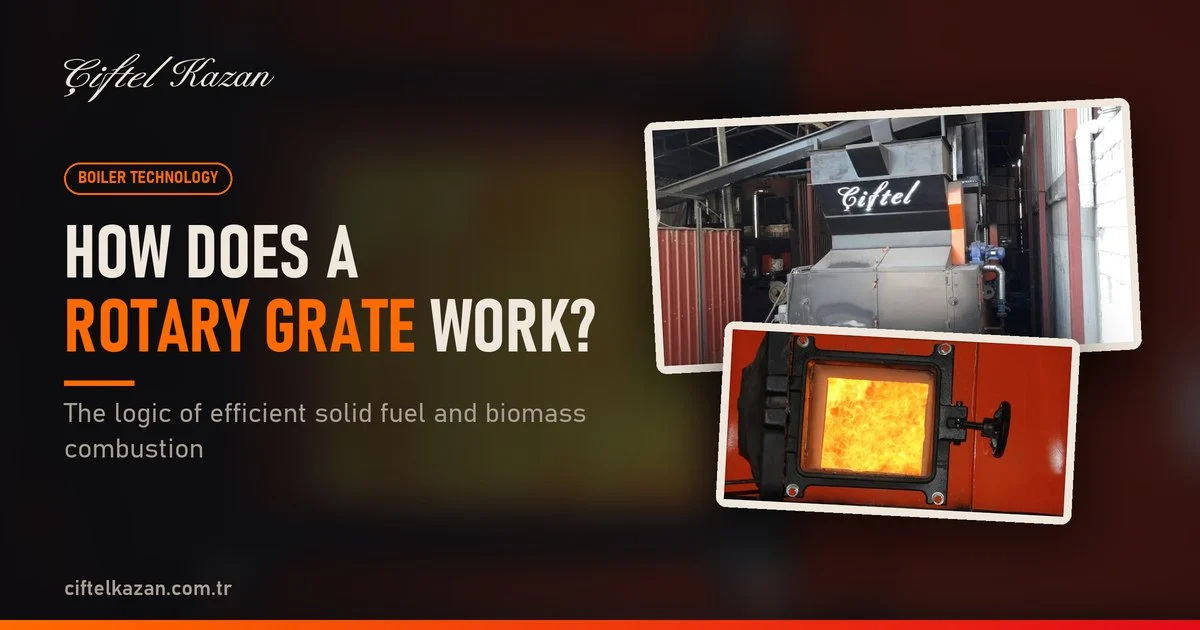
Combustion in natural gas or liquid fuel is relatively easy to control because the burner mixes the fuel and air in the proper proportions. With solid fuel, however, the situation is different: The fuel is a material that is fragmented, moist, and contains ash; it takes time to burn and goes through several stages. A system that cannot control these stages either fails to burn the fuel completely or operates with more air than necessary, sending heat up the chimney.
The rotary grate is a combustion system that makes the burning of solid fuel continuous, automatic, and controlled. In this article, we explain how the rotary grate works and why it is efficient.
From Fixed Grates to Moving Grates
In traditional furnaces with fixed grates, fuel is added manually or intermittently, and ash is removed at regular intervals. With this method, the thickness of the fuel bed constantly changes, air distribution becomes irregular, and combustion quality depends largely on the operator’s intervention at that moment. As a result, unburned fuel remains in the ash, excess air increases in the flue gas, and efficiency decreases.
In a rotary grate, however, the grate surface moves slowly, carrying the fuel from one end of the furnace to the other. Fuel is fed onto the grate continuously and evenly; as combustion progresses, the ash is discharged at the end of the grate. Thus, combustion becomes a continuous and balanced process.
Stages of Combustion on the Grate
As the fuel moves across the grate, it goes through the following stages in sequence:
- Drying: The moisture inside the fuel evaporates due to the furnace’s heat.
- Release of volatile substances and ignition: Combustible gases are released from the heated fuel and ignite.
- Combustion of fixed carbon: The solid portion of the fuel, from which gases have been released, burns as embers on the grate.
- Removal of ash and slag: The fully burned portion cools at the end of the grate and is removed as ash.
The grate speed is adjusted to allow sufficient time for the fuel to complete these stages. If the speed is too high, the fuel is discharged before it is fully burned; if it is too low, fuel accumulates on the grate and combustion is impaired.
The Key to Efficiency: Air Management
In solid fuel combustion, combustion air is supplied in two ways:
- Primary air: Supplied from beneath the grate, it passes through the fuel bed and burns the carbon in the embers. Dividing the area beneath the grate into zones ensures that each zone receives the amount of air it needs.
- Secondary air: Supplied from above the grate, it ensures that the combustible gases released from the fuel burn completely inside the furnace.
If too little air is supplied, combustion is incomplete, resulting in smoke and carbon monoxide. If too much air is supplied, the cold air entering the furnace heats up and is expelled through the chimney, reducing efficiency. The correct adjustment is made by monitoring the oxygen level in the flue gas. In our article, a qualified operator demonstrated the impact of these adjustments on operating costs with specific figures.
What Fuels Can a Rotary Grate Burn?
Rotary grate systems can operate with various solid fuels:
- Coal: Coal of varying quality, such as lignite and imported coal.
- Biomass: Agricultural and industrial byproducts such as olive pomace and olive pits, as well as hazelnut shells, wood chips, and pellets.
This flexibility is particularly important for facilities that produce byproducts that can be used as fuel. For example, a facility in the olive oil industry can convert olive pomace and olive pits into energy by burning them in a rotary grate boiler. Our Verde Yağ project is an example of this.
However, each fuel has different moisture content, ash content, calorific value, and ash melting behavior. The grate speed, air distribution, and fuel feeding must be adjusted according to these characteristics. Consulting the boiler manufacturer before switching fuels prevents efficiency loss and grate problems.
Automatic Feeding and Ash Removal
In rotary grate systems, fuel is automatically fed to the grate via a bunker and feeder; ash is continuously removed at the end of the grate. As a result:
- Laborious tasks such as manual fuel loading and ash removal are eliminated,
- Steam pressure remains more stable because combustion continues uninterrupted,
- Cold air ingress and heat loss caused by frequent opening of the furnace door are prevented.
Çiftel’s Patented Rotary Grate System
Çiftel Kazan’s solid fuel combustion system with a rotary grate is patented (TR 2010 01291 B). We implement our system both in our header-type water-tube steam boilers and in pre-furnace solutions used to adapt existing boilers for solid fuel. For details, please visit our Solid Fuel Combustion System with Rotary Grate page.
Let’s Evaluate Your Boiler Room Together
As Çiftel Kazan, we have been manufacturing steam, thermal oil, and hot water boilers at our facility in Kemalpaşa, İzmir, since 1986. Contact us or reach out via the +90 232 479 11 21 / +90 544 479 11 21 numbers to assess the current condition of your boiler room together and discuss what can be done to improve efficiency and reduce costs.
Frequently Asked Questions
In a fixed grate, fuel feeding and ash removal are intermittent, and combustion depends on operator intervention. In a rotary grate, fuel is fed continuously, burns progressively on the grate, and ash is automatically removed; this ensures more balanced and efficient combustion.
Yes. Biomass fuels such as olive pomace, olive pits, hazelnut shells, wood chips, and pellets can be burned in rotary grate systems. The system must be adjusted according to the characteristics of the fuel to be used.
Based on steam demand, fuel type, and combustion quality. The goal is for the fuel to burn completely before reaching the end of the grate. If unburned fuel is visible in the ash, the speed or air settings should be reviewed.
Yes, in boilers that are suitable. Pre-furnace solutions installed in front of an existing boiler make it possible to burn solid fuel without replacing the boiler. We’ve covered the details in our article on pre-furnaces.
Other Posts
All
Need a boiler or pressure vessel?
Let’s plan the best solution for your project together, backed by 40 years of engineering experience.