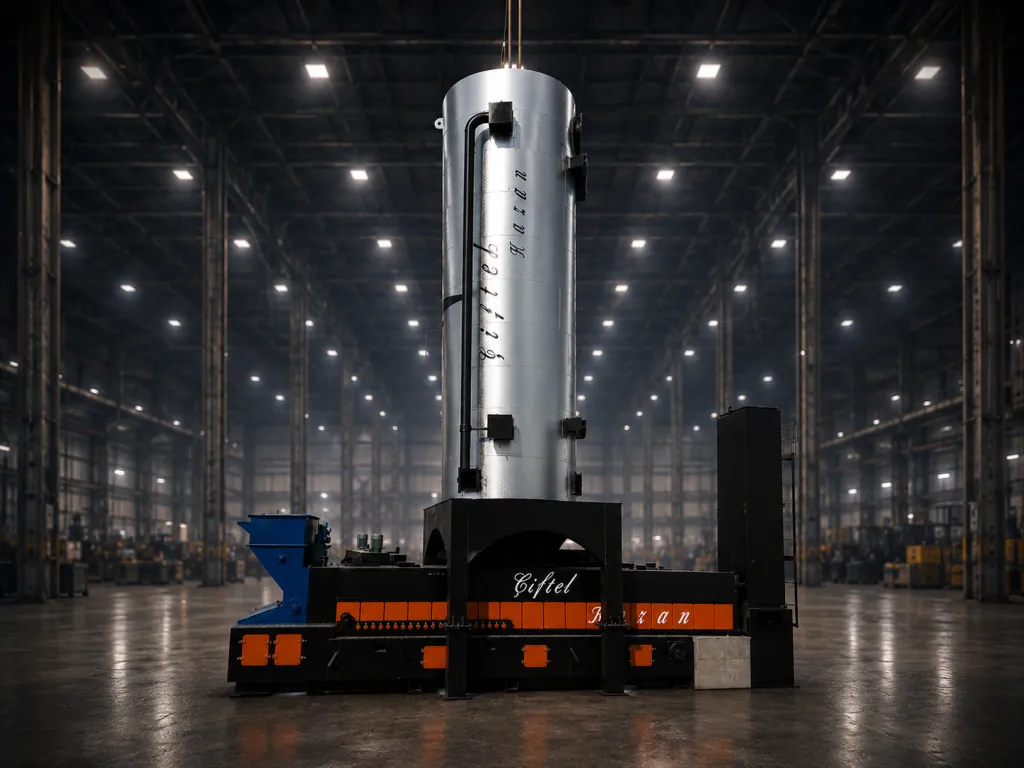
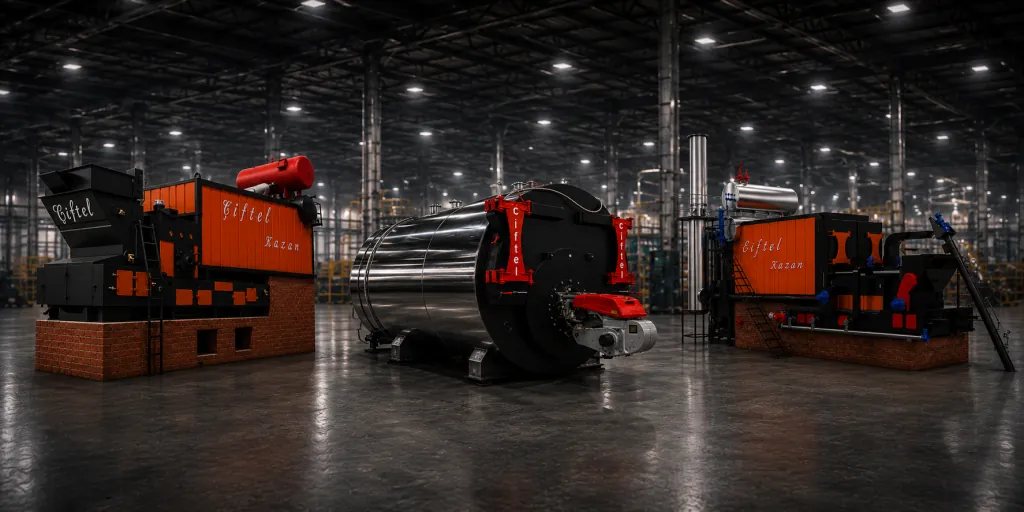
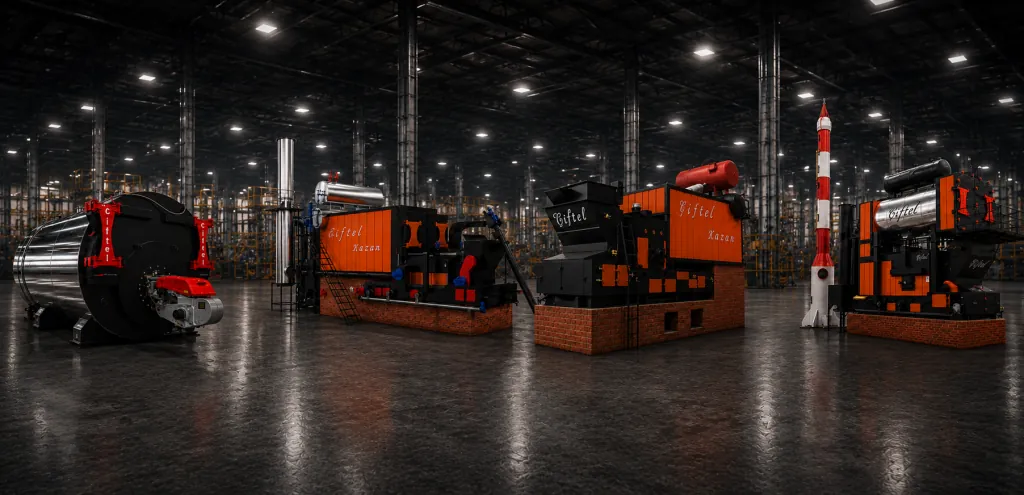
A natural gas boiler is a boiler that produces steam, hot water, superheated water, or thermal oil by burning natural gas in a burner. The natural gas steam boiler—the most common type in industry—stands out for its clean combustion, ease of automation, and minimal boiler room requirements. Çiftel Kazan manufactures three-pass Scotch-type natural gas steam boilers, as well as natural gas-fired hot water, superheated water, and thermal oil boilers in Izmir. This guide covers natural gas boilers designed for industrial facilities, not residential combi boilers or radiators.
How does a natural gas steam boiler work?
The burner mixes natural gas with combustion air in the correct ratio and ignites the mixture in the boiler’s furnace tube. In a Scotch-type boiler, the hot gases pass twice more through the smoke tubes after the furnace tube (three passes) and transfer their heat to the water in the shell. The resulting steam collects in the upper section of the shell. A modulating burner maintains constant pressure by adjusting the flame size according to steam consumption, thereby preventing unnecessary fuel consumption.
Scotch-type natural gas steam boiler
The natural gas-fired Scotch-type steam boiler is one of the most preferred designs among natural gas-fired steam boilers. Its three-pass smoke-tube design maximizes the utilization of heat from combustion gases; its large water volume and steam storage capacity ensure stable pressure even during sudden changes in demand. It is equipped with fully automatic control and safety systems. You can also read our article comparing Scotch boilers with water-tube boilers.
Our other natural gas-fired boilers
- Hot water boiler: hot water at 90–110 °C under low pressure; central heating and low-temperature processes.
- Superheated water boiler: water at 110–180 °C under pressure; used for district heating and high-temperature processes.
- Thermal oil boiler: heat up to 300–320 °C at atmospheric pressure; textile, wood, and chemical processes.
- Hybrid steam boiler: Can operate with solid and liquid fuels in addition to gas; for facilities requiring fuel flexibility.
- Type D water-tube boiler: natural gas-fired steam production at high capacity and pressure.
Natural gas or coal?
| Criteria | Natural gas boiler | Coal / biomass boiler |
|---|---|---|
| Initial investment | Lower | Higher (combustion system, bunker, ash removal) |
| Fuel cost | Generally higher | Generally lower |
| Operation | Simple, fully automatic | Easy with automatic feeding; fuel logistics are required |
| Boiler room area | Small | Fuel storage area required |
| Emissions | Low | Flue gas treatment may be required |
In facilities with high and constant consumption, the low cost of solid fuel often offsets the initial investment difference in a short time; in facilities with variable or low consumption, however, natural gas may be a more sensible choice. We’ve covered solid fuel options in our coal-fired boiler guide. If you’d like to convert your existing natural gas boiler to solid fuel without replacing it, check out our pre-furnace solution.
Ways to improve efficiency in a natural gas boiler
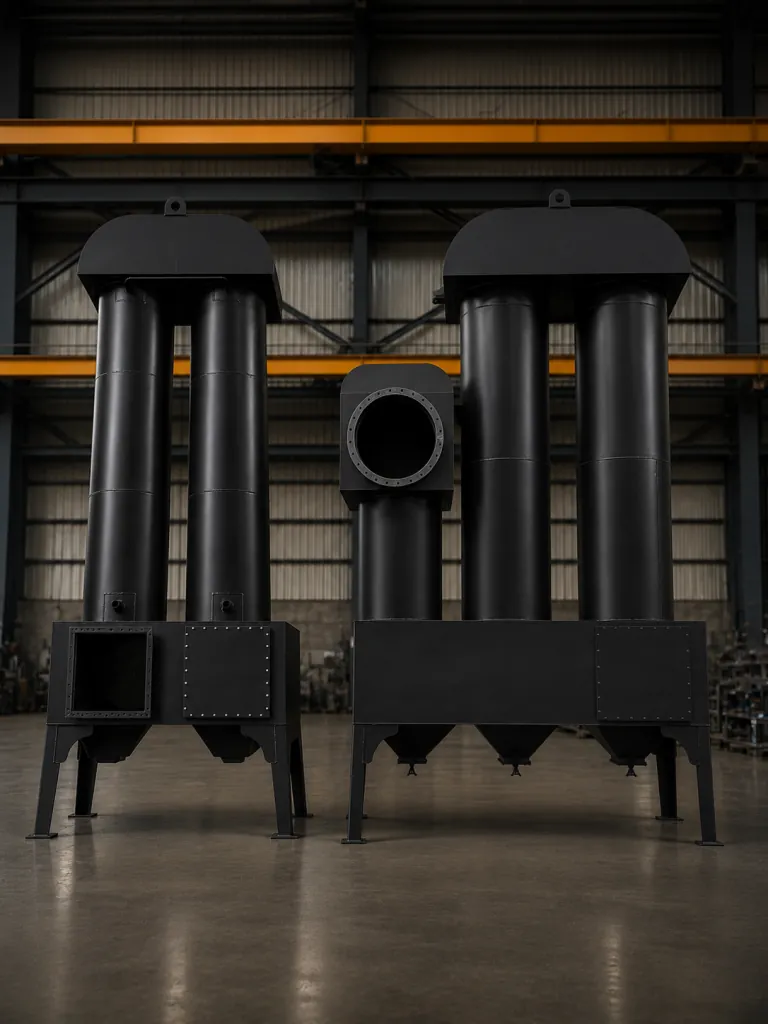
- Economizer: Preheats the feedwater using the heat from flue gases; it is one of the most effective energy-saving devices in natural gas boilers. Economizer
- Modulating burner and proper air adjustment: Excess air increases heat loss through the flue; proper combustion adjustment maintains efficiency.
- Condensate return: Returning hot condensate to the boiler saves fuel and water.
- Proper capacity: A boiler that is oversized loses efficiency by frequently cycling on and off. Capacity selection
Natural gas boiler production at Çiftel Kazan
We design our natural gas boilers according to your facility’s steam or heat requirements, operating pressure, and installation space; we handle burner selection, automation, installation, and commissioning all under one roof. We have completed over 1,250 projects since 1986; we provide 24/7 service throughout Turkey and spare parts support for the entire lifespan of the boiler.